Weather-driven ground stop briefly halted Phoenix Sky Harbor arrivals Tuesday, triggering delays during early-morning operations
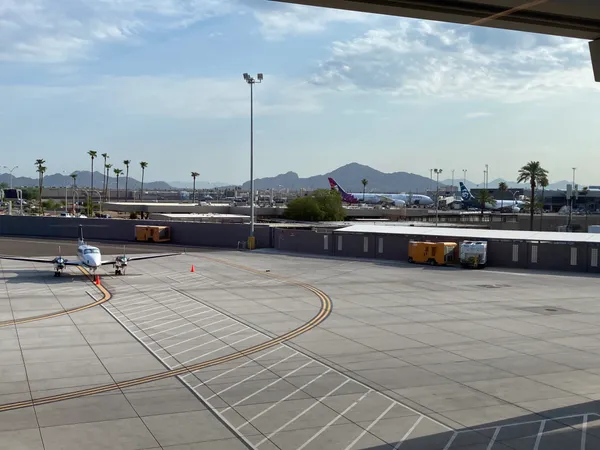
Ground stop issued and lifted within the morning window
Phoenix Sky Harbor International Airport experienced a temporary ground stop Tuesday morning, March 10, 2026, as low clouds reduced operational margins for aircraft arriving and departing the region. The restriction was implemented around 7 a.m. local time and was lifted roughly by 8:30 a.m., allowing traffic to begin moving again, though delays continued to ripple through schedules.
A ground stop is an air traffic management measure used to temporarily hold aircraft on the ground at their departure airports when conditions at the destination airport limit safe arrival rates. In this case, the limiting factor was low ceilings associated with weather conditions over metro Phoenix.
What the airport status data showed after the stop ended
After the ground stop was lifted, airport status information showed ongoing departure delays at Sky Harbor, with a range generally measured in tens of minutes rather than hours. The same status data reflected overcast conditions in the area during the morning, consistent with the low-ceiling environment that can constrain runway arrival capacity and spacing requirements between aircraft.
Why low ceilings can reduce capacity even without storms
While severe thunderstorms and wind are commonly associated with widespread disruptions, low cloud ceilings can be equally consequential for an airport’s throughput. When ceilings drop, air traffic controllers and flight crews may need to operate under instrument flight rules more consistently, which typically requires greater separation between arriving aircraft and can reduce the number of arrivals that can be handled per hour.
At large hub airports such as Sky Harbor, even a brief reduction in arrival rate can lead to a backlog that takes time to unwind. Airlines may respond by holding aircraft at origin airports, adjusting gate utilization, and re-sequencing crews and aircraft rotations to recover the schedule.
Passenger impacts: delays outnumbered cancellations
The immediate passenger impact was primarily delays rather than widespread cancellations. Travelers were advised to monitor airline notifications and airport departure boards, as the effect of a short ground stop can persist beyond the time it is lifted—particularly for inbound aircraft that were held outside the system or delayed at their origin airports.
- Travelers connecting through Phoenix may face tightened connection windows when inbound flights arrive late.
- Early-morning delays can cascade into the afternoon as aircraft and crews fall out of planned rotations.
- Gate availability can become constrained when arriving flights bunch together after restrictions ease.
Operational restrictions such as ground stops are typically deployed to manage demand when conditions reduce the safe arrival rate at an airport, then removed once capacity improves.
What to watch next
With the ground stop lifted within the morning period, the key variables for travelers became the pace of recovery and the persistence of low cloud conditions. If ceilings remained low, arrival rates could continue to be managed through delays even without a formal stop. Travelers scheduled to fly into or out of Phoenix were encouraged to check for rolling updates to departure times and to allow extra buffer for connections and ground transportation.