Two Phoenix Sky Harbor Terminal 4 security checkpoints close temporarily as TSA staffing strains screening operations
What changed at Phoenix Sky Harbor
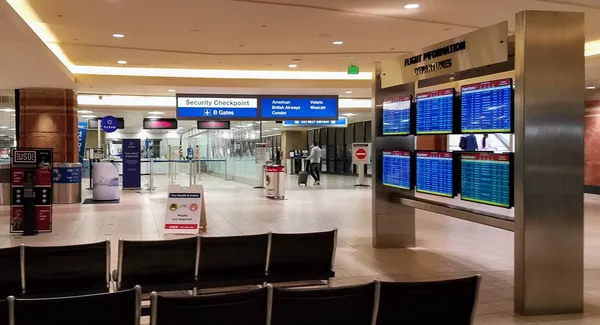
Two of the four Transportation Security Administration (TSA) screening checkpoints inside Phoenix Sky Harbor International Airport’s Terminal 4 have been temporarily closed because of staffing constraints, reducing the number of passenger entry points into the terminal’s secure area.
Terminal 4 is the airport’s largest terminal and hosts the bulk of daily departures. Airport guidance indicates that, under normal conditions, Terminal 4’s Checkpoints A, B, C and D can all be used to reach any gate in the terminal, allowing passenger volume to be distributed across multiple screening locations.
Which checkpoints are affected and what remains open
During the temporary consolidation, screening is being directed through two checkpoints rather than four. In previous staffing-driven consolidations at Terminal 4, passengers were routed through Checkpoints A and C while Checkpoints B and D were closed. Airport and TSA messaging in those instances warned that wait times for standard screening could rise and advised travelers to adjust arrival times accordingly.
- Terminal 4 normally operates four checkpoints (A, B, C and D).
- At least one checkpoint in each terminal is designed to remain available around the clock as part of baseline operations.
- When checkpoints are consolidated, travelers may face longer lines at the remaining open locations.
Operational impacts: lines, staffing and passenger flow
Checkpoint closures do not change the security requirements for passengers, but they can significantly alter throughput at the front end of the travel journey. When screening capacity is reduced, queues can grow quickly during peak departure banks, especially early mornings and holiday or event travel periods.
The closures also concentrate passenger flow into fewer queuing spaces, increasing the importance of real-time wait-time monitoring and flexible arrival planning. Airport systems publish checkpoint wait times, and travelers can adjust by choosing among available checkpoints within the terminal where access patterns allow.
Why staffing pressure at TSA has become a recurring constraint
TSA staffing challenges have periodically affected checkpoint availability at Sky Harbor in recent years, including during periods of elevated employee absences linked to COVID-19 impacts. More broadly, temporary reductions in checkpoint operations can be triggered by short-notice staffing gaps, uneven demand during peak travel windows, or facility-related constraints that limit safe working conditions.
Sky Harbor has also continued to modernize screening operations. In early 2026, the airport began rolling out touchless TSA PreCheck identity verification in Terminal 3 with scheduled expansion across Terminal 4 checkpoints, reflecting a wider push to streamline identity checks and reduce friction at the document-check phase of screening.
Temporary checkpoint consolidation is typically used to concentrate available officers at fewer lanes, aiming to keep screening moving even when staffing is constrained.
What travelers can do now
- Check same-day security wait times before leaving for the airport and again upon arrival.
- Allow extra time during peak periods, particularly early-morning departure waves.
- Use any open Terminal 4 checkpoint that provides access to your gate area.
- Carry acceptable identification even when enrolled in expedited programs or touchless options.
No timeline has been confirmed for when full four-checkpoint operations will resume, and checkpoint availability can shift based on day-to-day operational necessity.