True North Studio weighs demolishing two Roosevelt Row buildings as plans advance for added housing
Proposal targets infill housing in Phoenix’s arts district amid preservation and growth pressures
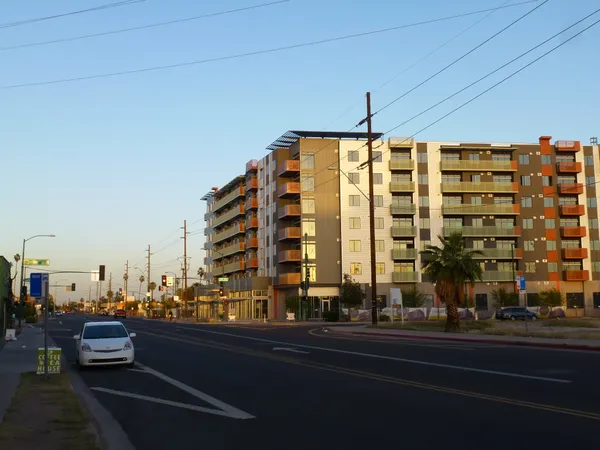
A development group tied to Roosevelt Row’s recent transformation is exploring the demolition of two existing buildings as part of a plan to expand housing in and around the Evans Churchill neighborhood, a central piece of downtown Phoenix’s arts and nightlife corridor.
True North Studio, a downtown Phoenix-based real estate development company, has previously sought demolition permits for multiple small structures in the Roosevelt Row area as it assembled parcels for larger projects. In earlier demolition filings involving the company, city historic preservation staff indicated that certain buildings proposed for removal were not eligible for historic designation, a factor that can shape the level of review and the range of options available to the city during permitting.
The renewed focus on housing comes as Roosevelt Row continues to draw development interest because of its proximity to light rail, downtown employment, and the concentration of restaurants, galleries, and entertainment venues that anchor the district’s First Friday arts events. The area has also been the subject of long-running debates over how to balance new residential density with the preservation of older building stock that contributes to the street-level character of the corridor.
Roosevelt Row has been repeatedly cited by planners as a district where historic fabric, adaptive reuse, and new multifamily construction intersect within a transit-oriented downtown environment.
True North Studio’s footprint in the neighborhood has expanded over time through property acquisitions and redevelopment planning. The company has promoted a mix of concepts in the vicinity, including projects involving hospitality and mixed-use development, alongside smaller-scale renovations and adaptive reuse work on existing properties.
Any new demolition effort would move through Phoenix’s established permitting process, which can include demolition holds and public-facing review steps depending on a building’s status and location. In parts of central Phoenix, historic district boundaries and local preservation frameworks can add layers of scrutiny even when a structure is not formally protected. At the same time, Phoenix’s broader policy direction has emphasized transit-oriented growth and additional housing supply near the urban core, intensifying the practical pressure to build upward on assembled parcels.
The underlying policy tension is familiar in Roosevelt Row: housing demand and land values have increased, while many residents, business owners, and preservation advocates argue that incremental loss of smaller buildings risks eroding the human-scale streetscape that helped make the district a destination.
- Supporters of additional housing typically point to proximity to transit and downtown jobs as reasons to add units in the core.
- Preservation advocates have focused on the cumulative impact of demolitions and the role of older structures in sustaining small businesses and cultural uses.
Project specifics—including the exact sites, the number of residential units contemplated, and the development timeline—depend on final design work and approvals. What is clear is that the next phase of Roosevelt Row’s buildout is again putting the district’s defining trade-off at the center of city planning: how to add housing while retaining the physical attributes that made the neighborhood attractive in the first place.