Phoenix Sky Harbor reviews vehicle transponders on airfield after national scrutiny of runway-safety safeguards
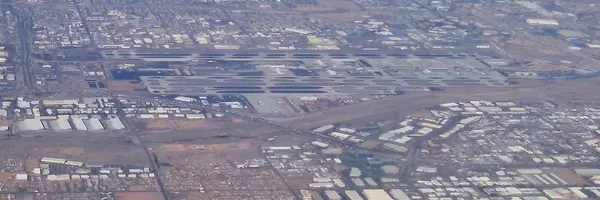
What is being examined at Phoenix’s busiest airport
Phoenix Sky Harbor International Airport is facing renewed scrutiny over whether all airfield vehicles that operate in movement areas are equipped with transponders—devices that electronically broadcast a vehicle’s identity and position to surveillance systems used by air traffic control. The issue has gained urgency nationally after investigators in a major runway collision highlighted that a surface-safety system did not perform as intended because an emergency vehicle lacked a transponder.
At large U.S. airports, surface surveillance tools are designed to help controllers track aircraft and certain vehicles on runways and taxiways. These systems combine multiple inputs, including radar and signals from onboard transponders, to generate a real-time display in the control tower. If a vehicle is not transmitting, it can be harder for the system to identify it reliably and generate alerts intended to prevent conflicts.
How transponders fit into runway-incursion prevention
Transponders are a foundational part of the broader “layers of safety” approach that includes controller clearances, cockpit and vehicle radio communications, signage and lighting, and automated warnings. At airports with advanced surface surveillance, transponders allow the system to label and track individual targets more precisely, improving situational awareness during complex operations or reduced visibility.
In the LaGuardia investigation briefing on March 24, 2026, federal investigators said a runway warning system did not trigger an alert because the fire truck involved was not equipped with a transponder, prompting wider attention to vehicle equipage at major airports.
Federal context: equipment and funding
The Federal Aviation Administration has identified ASDE-X as operational at 35 of the largest U.S. airports and has promoted measures to strengthen surface situational awareness. In 2025, the agency encouraged airports with advanced surface surveillance to equip vehicles that regularly operate in movement areas with transponders and indicated that federal funding could be used to support installations.
Separately, aviation reference materials used by pilots for Phoenix Sky Harbor include operational notes emphasizing transponder use on airport surfaces for aircraft that are equipped—underscoring the role electronic visibility plays in surface safety. Vehicle requirements can differ by operator and program, but the principle is consistent: accurate, timely position information reduces uncertainty in high-consequence environments.
What questions matter locally
The central questions for Phoenix Sky Harbor are practical and measurable: which classes of vehicles operate in the movement area, which are equipped with functioning transponders, how equipage is maintained and audited, and how coverage gaps are handled during emergencies when multiple units may be moving quickly. Airports typically distinguish between vehicles that routinely enter active areas—such as operations, maintenance, and airport rescue and firefighting units—and vehicles that should remain outside the movement area or require escort.
- Inventory: which airfield vehicles routinely enter runways/taxiways
- Equipage: how many have transponders and how they are configured
- Procedures: how controllers and vehicle operators coordinate crossings and holds
- Oversight: inspection, maintenance, and compliance checks
As air traffic volumes and operational complexity increase, attention to vehicle transponders has shifted from a technical detail to a core runway-safety consideration. Any review at Phoenix Sky Harbor will ultimately be judged on whether it produces clear accountability for equipage, consistent operating procedures, and a verifiable reduction in the chance that a vehicle’s position is unknown or misidentified during critical moments.