Phoenix photo safety speed cameras begin issuing citations March 25 after 30-day warning period ends
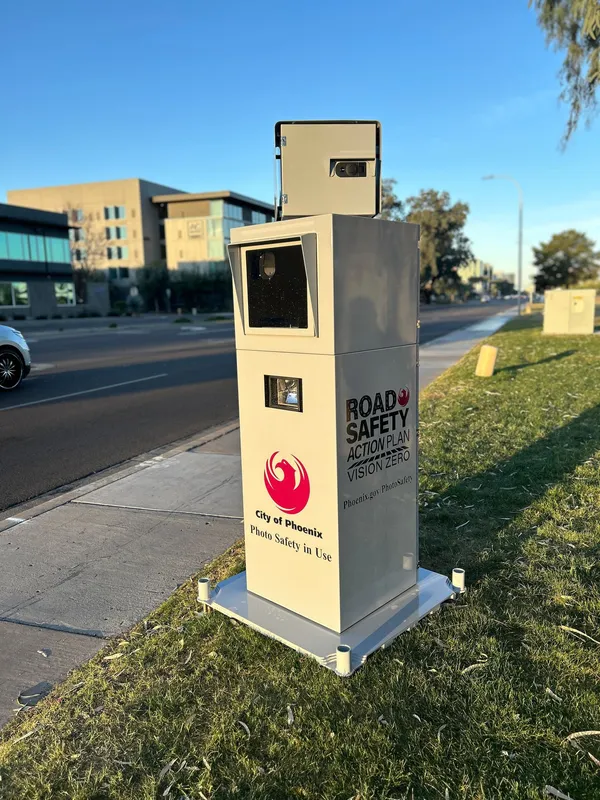
Ticketing begins as Phoenix restarts automated speed enforcement on selected corridors and school zones
Phoenix will begin issuing citations from its photo safety camera program on March 25, marking the end of a 30-day warning period that started February 23. During the warning phase, drivers recorded exceeding posted speed limits receive mailed notices rather than citations.
The city’s program is built around two components: corridor cameras placed mid-block on nine roadway segments and additional cameras deployed in 15-mph school zones. The corridor camera locations are scheduled to rotate after a six-month period. The school-zone units are planned to rotate weekly throughout the school year.
Where the corridor cameras are being deployed
Phoenix has identified the following mid-block corridors for the initial round of fixed deployments:
- Thunderbird Road: 35th Avenue to Interstate 17
- 32nd Street: Greenway Parkway to Bell Road
- Thunderbird Road: Interstate 17 to 19th Avenue
- 7th Street: Thomas Road to Indian School Road
- Indian School Road: 83rd Avenue to 75th Avenue
- Camelback Road: 24th Street to 32nd Street
- 51st Avenue: Van Buren Street to Interstate 10
- Baseline Road: 16th Street to 24th Street
- Bell Road: Interstate 17 to 19th Avenue
How the enforcement process works under Arizona law
Arizona statutes governing photo enforcement set specific procedural requirements. State law provides that a person who receives a mailed notice of violation generated by a photo enforcement system for certain speeding or traffic control violations does not have to identify the person in the photo or respond to the notice. The law also requires law enforcement review of evidence generated by a photo enforcement system before a citation is issued, and it restricts the role of private vendors in determining whether a violation occurred.
After March 25, the city’s transition from warnings to citations means recorded violations may carry civil penalties, subject to the service and adjudication procedures applicable to civil traffic matters.
Program structure and funding
Phoenix has described the photo safety camera initiative as focused on roadway safety rather than revenue generation. The city has stated the program operates on a cost-recovery model, with any remaining funds directed toward implementing its Vision Zero Road Safety Action Plan.
The restart follows a period in which Phoenix’s automated enforcement program was not operating. With citations set to begin March 25, the city’s initial months of operation are expected to establish baseline data on recorded violations across the selected corridors and rotating school-zone deployments.