Phoenix Lights, 1997: Why the Arizona Sky Sighting Still Draws Debate Nearly Three Decades Later
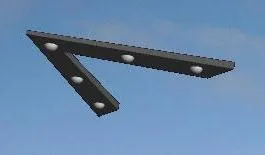
A two-part night in March 1997 that became a lasting public mystery
On March 13, 1997, residents across Arizona and parts of Nevada reported unusual lights moving through the night sky—an episode that later became known as the “Phoenix Lights.” The event remains one of the most widely discussed mass sightings in the United States, in part because witness descriptions and available video appear to document more than one phenomenon during the same evening.
Reports describe an earlier sequence of lights observed over multiple communities, followed by a later set of bright lights that appeared to hover in formation southwest of Phoenix. The combination of widespread eyewitness testimony, limited contemporaneous documentation, and competing explanations has kept the incident in public discussion for nearly 30 years.
What is firmly established about the timeline
Witness reports place the first wave of sightings in the evening hours, with early calls describing clusters of red-orange lights seen north of Phoenix. Later, around approximately 10:00 p.m. local time, numerous observers in the Phoenix area reported a row or cluster of bright lights that appeared relatively stationary before gradually fading.
- The sightings occurred on Thursday, March 13, 1997.
- Accounts describe at least two distinct intervals of activity separated by time and differing behavior: movement across the state earlier, and apparently hovering lights later.
- Home video recordings widely circulated afterward primarily depict the later, stationary-looking lights.
The military flare explanation and what it does—and does not—cover
For the later lights, a detailed explanation exists within documented training activity: illumination flares dropped during night exercises at the Barry M. Goldwater Air Force Range in southwestern Arizona. The flares involved are commonly described as LUU-2–type illumination flares deployed by A-10 aircraft during training, designed to descend slowly under parachute and burn intensely—an effect consistent with bright points of light that appear to hang in the sky and then wink out.
This explanation aligns most directly with the second event because it addresses the stationary appearance, gradual descent, and sequential fading pattern seen in recordings and described by many witnesses. However, it does not fully resolve the earlier reports that described a moving formation spanning multiple locations and times.
Public attention, official messaging, and a notable reversal
The incident also entered political folklore. In the months after the sightings, Arizona’s governor at the time, Fife Symington, held a public event that treated the subject humorously. A decade later, Symington stated publicly that he had personally witnessed the lights, describing the experience as striking and difficult to explain.
The Phoenix Lights remain a rare case where a large audience reported unusual activity, while the best-documented segment corresponds to a known training capability.
Why the phenomenon persists in public debate
The Phoenix Lights continue to captivate because the record is uneven: the later episode has a concrete, testable military-training match, while the earlier wave relies more heavily on dispersed testimony without a single definitive dataset that settles altitude, speed, or identity. As a result, the case persists as a composite story—part documented aerial training effects, part unresolved eyewitness narrative—anchored to a specific date and a city whose name the event permanently adopted.