Phoenix hikers crowd desert trails as historic March heat threatens records and triggers safety restrictions
Early-season heat draws hikers—then forces a safety recalculation
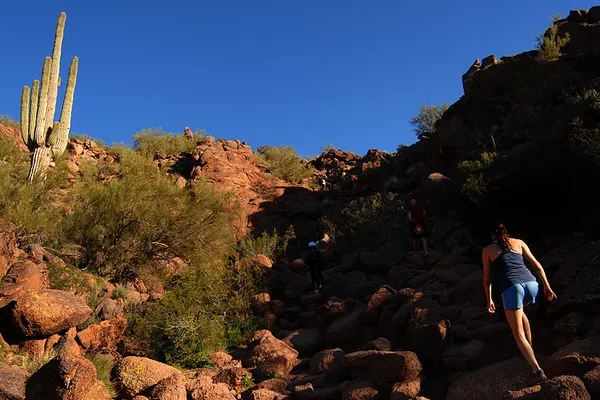
Hikers have been packing popular Phoenix-area trails in the early morning and late evening as an unusual March heat surge builds across central Arizona, with forecasts showing temperatures far above seasonal norms and the potential for record-setting readings at Phoenix Sky Harbor.
Forecasts indicate a rapid warming trend through mid-March 2026, with triple-digit temperatures possible well before the typical onset of Phoenix’s hottest season. In Phoenix’s long-term record, the city has reached 100 degrees in March only once—on March 26, 1988—making any new triple-digit March day historically significant. Meteorologists have also highlighted the likelihood of all-time March record temperatures being challenged as the heat intensifies.
Heat warnings and trail restrictions: what changes for the public
City hiking restrictions in Phoenix are tied to National Weather Service extreme heat warnings. Under the city’s Trails and Heat Safety Program, certain high-use, high-risk routes are closed during warning periods, with closures generally set from 8 a.m. to 5 p.m. The program was expanded in late 2024 to include all trails at South Mountain Park and Preserve and to start closures an hour earlier than previously used.
The policy targets trails where rescues are frequent and conditions can become hazardous quickly due to steep grades, limited shade, and heat retention from exposed rock surfaces. Even when closures apply only to select city-managed trails, officials continue to discourage hiking during the hottest hours across the region because heat illness can develop rapidly—especially early in the season, when residents and visitors are less acclimated.
Why early heat is different: acclimatization and rescue risk
Public-safety concerns extend beyond temperature numbers. Heat impacts tend to be higher when extreme warmth arrives abruptly, before people have adapted to hot-weather exertion. This is particularly relevant for spring visitors, out-of-state travelers, and hikers returning after winter, when cardiovascular strain and dehydration risk can rise quickly during climbs.
Rescues on Phoenix’s mountains remain a persistent seasonal issue, with the city’s fire crews conducting technical rescues year-round. Recent summers have shown fluctuating rescue totals, reinforcing the city’s focus on prevention through closures, signage, and outreach rather than relying solely on response operations.
Practical guidance used by local agencies during extreme heat
- Plan hikes at dawn and finish early; avoid late-morning through afternoon starts during heat warnings.
- Carry more water than expected for the route and duration; turn around before supplies run low.
- Choose shaded or lower-exposure routes and reduce pace on steep, sun-facing climbs.
- Know symptoms that warrant stopping immediately: dizziness, confusion, nausea, cramps, or chills.
In Phoenix, the combination of steep terrain, intense sun, and rapid warming can turn a routine hike into an emergency—especially during the first major heat of the year.
With the hottest days still expected to arrive later in the year, the mid-March heat spike is serving as an early test of trail safety systems and individual preparedness, at a time when record temperatures remain a realistic possibility.