How JFK and LBJ came to Phoenix to honor Arizona’s Senator Carl Hayden and his influence
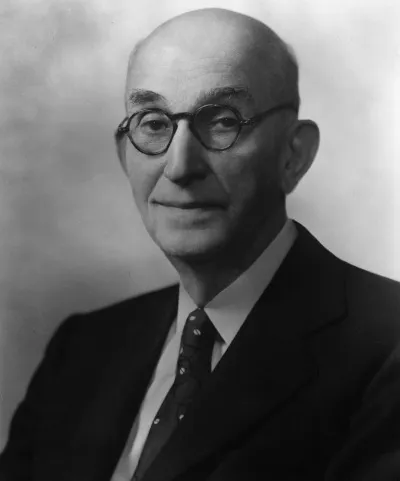
A rare gathering of Washington power in Phoenix
On November 17, 1961, Phoenix became the setting for an unusually concentrated display of national political power as President John F. Kennedy and Vice President Lyndon B. Johnson traveled to Arizona to honor Senator Carl Hayden. The visit culminated in a formal dinner at the Westward Ho Hotel marking what was billed as Hayden’s 50th anniversary in Congress.
The tribute reflected Hayden’s singular standing in mid-century Washington: a long-serving Democrat from a comparatively small state who nonetheless held decisive influence through seniority and committee leadership. At the time, Hayden was also president pro tempore of the U.S. Senate, a post that placed him in the line of presidential succession.
Who Carl Hayden was — and why the milestone mattered
Hayden entered Congress in 1912, shortly after Arizona achieved statehood, and went on to build a career defined less by public profile than by institutional power. He served in the U.S. House before moving to the Senate in 1927, ultimately remaining in Congress until January 3, 1969.
By the early 1960s, Hayden chaired the Senate Appropriations Committee, giving him leverage over the funding of federal programs and projects nationwide. His approach was widely characterized by restraint in public debate and effectiveness in committee work, a combination that helped him accumulate influence across party and regional lines.
First entered Congress: February 19, 1912
Senate service: 1927–1969
Key leadership roles: Senate president pro tempore; chair of Appropriations
Kennedy’s Phoenix remarks and the emphasis on Western development
Kennedy’s remarks at the dinner placed Hayden’s legacy within the arc of federal investment in the American West. The speech tied Hayden’s career to programs that shaped infrastructure, irrigation, reclamation, and regional economic development. The framing was consistent with Hayden’s legislative reputation as a central figure in securing federal resources and authorizations that affected water, highways, and other long-term projects important to Western states.
The Phoenix dinner underscored how congressional seniority and committee power could translate into tangible federal investment — and how a senator from a young state could become a national fixture.
The event’s place in Arizona and national political history
The Phoenix appearance by both Kennedy and Johnson was notable not only for the prominence of the attendees but also for its timing. In late 1961, the Kennedy administration was still early in its tenure and heavily focused on building congressional relationships critical to advancing domestic initiatives. Honoring Hayden in person served as a public acknowledgment of that relationship and of Hayden’s ability to shape legislative outcomes.
The gathering also captured a transitional moment in American politics: an elder statesman whose career began at the dawn of Arizona’s statehood being celebrated by leaders representing a new generation. Hayden would remain in office for several more years, retiring in 1969 after more than half a century in Congress.