How Amelia the Airplane Mascot Became a Recognizable Public-Facing Symbol of Phoenix Sky Harbor Airport
A mascot built for visibility inside a high-traffic airport
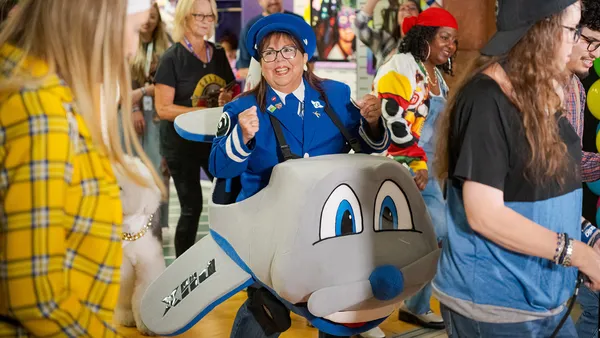
Phoenix Sky Harbor International Airport has increasingly used an in-terminal mascot—Amelia the Airplane—as a public-facing symbol tied to customer service, seasonal passenger-outreach events, and community appearances. The character is presented as a costumed airplane and is regularly positioned in areas where travelers congregate, including terminal lobbies and post-security corridors, with appearances structured around photo opportunities and passenger interaction.
Airport materials describe Amelia as part of a broader effort to create an approachable, service-oriented atmosphere in a complex travel environment. That strategy aligns with Sky Harbor’s operational reality as a large-volume airport, where passenger navigation, queuing, and time pressure can shape the tone of the traveler experience.
Who performs as Amelia, and how the role fits into airport operations
The person behind the costume has been publicly identified by the airport as Sylvia Mejia-Bivens, an Aviation Department employee. Airport communications also describe her primary role as an administrative aide in the Technology Division and note her long tenure within the department.
Amelia’s visibility has been reinforced through repeat deployment during recurring airport programs that bring staff and volunteers into direct contact with travelers. These appearances are typically framed as part of customer engagement—creating an easy-to-recognize point of contact and a consistent visual marker for airport hospitality initiatives.
Where travelers are likely to see Amelia at Sky Harbor
Amelia’s presence has been documented at Sky Harbor during multi-day passenger-appreciation activations, including holiday-season programming that combines giveaways, activities, and meet-and-greet moments. The mascot has also appeared during shorter campaign-style events around peak travel windows.
Passenger-appreciation programs scheduled around major travel periods, including Thanksgiving-season activity series that include photos with Amelia.
In-terminal activations in which customer-service staff and volunteers distribute items to travelers while the mascot participates in photos and interactions.
Community events outside the terminals, including local public gatherings where the airport maintains a presence.
How the mascot connects to volunteer programs and other “friendly airport” touchpoints
Amelia is often presented alongside other airport-facing initiatives designed to reduce friction and improve passenger comfort. Among the most visible is Sky Harbor’s volunteer ecosystem, which includes Navigators who provide directions and general assistance in the terminals.
In recent years, the airport has expanded that public-facing approach through additional volunteer branches, including a therapy-dog program known as PHX Navigator Buddies. The airport’s published program requirements describe trained therapy dogs and volunteer handlers who commit to regular weekly shifts after meeting screening and eligibility standards.
Why the mascot became a recognizable “face” of the airport
Amelia’s prominence is less a single-origin story than the product of repeated use in predictable settings: high-traffic terminal locations, scheduled appreciation campaigns, and coordinated volunteer-and-customer-service operations. In an environment where many interactions are brief and transactional, a consistent character functions as a stable visual cue—one that can be deployed across events, seasons, and outreach efforts while remaining immediately identifiable to travelers.
Across multiple airport programs, Amelia is positioned as a recurring point of passenger interaction—primarily through photos, greetings, and presence at public events.