Aurora expands driverless freight network, enabling 1,000-mile autonomous truck runs between Fort Worth and Phoenix
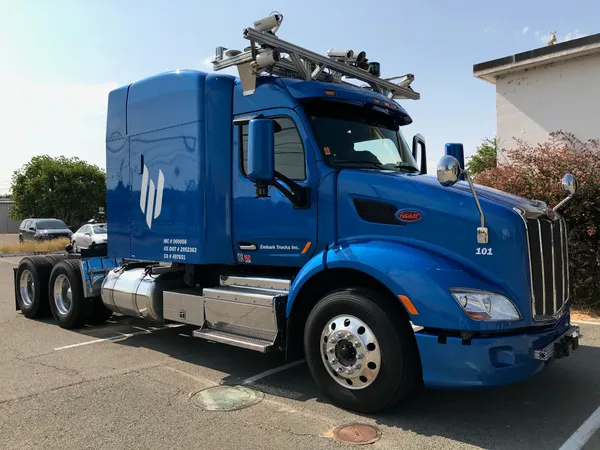
A larger autonomous trucking footprint across the Sun Belt
Aurora Innovation has announced an expansion of its driverless trucking network in the southern United States, outlining plans to grow to 10 routes and extend operations deeper into the Sun Belt. The company tied the network expansion to a new software release for its Aurora Driver system and to its latest annual financial update.
The update is designed to support longer, more operationally flexible freight movements, including routes that exceed the legal driving-time limits that apply to human commercial drivers under federal hours-of-service rules. Aurora says the new capabilities are intended to support new customer endpoints beginning in 2026 and to accelerate the time required to validate and deploy additional freight lanes.
Phoenix corridor: longer runs, fewer operational constraints
A central element of Aurora’s expansion is the Fort Worth–Phoenix freight corridor. Aurora has described a driverless lane of roughly 1,000 miles that can be completed in about 15 hours, a distance and duration that would typically require a human-driven operation to incorporate mandated breaks and rest periods. Aurora has positioned the corridor as a test of the economics of autonomous long-haul trucking, where time savings and higher vehicle utilization can materially affect shipping costs and asset productivity.
The company has also previously stated it opened a Phoenix terminal to support autonomous freight movements on this lane and has been conducting driverless operations for trucking customers including Hirschbach and Werner. Earlier commercial activity began with a Dallas–Houston lane in Texas, later followed by an additional Fort Worth–El Paso route as the company expanded westward.
Operational milestones: nighttime driving and scaling route validation
Aurora has reported progress in expanding when its trucks can operate, including validation of driverless nighttime operations on certain lanes. The company has also described using automated mapping and related tooling to speed route development and validation, a key requirement for scaling beyond a limited number of corridors.
For autonomous freight operations, the ability to run more hours per day is a major determinant of utilization, particularly on long routes where traditional driver scheduling can impose constraints.
Fleet and commercialization roadmap
Aurora has said it is upgrading its fleet plan with a truck model based on the International LT, which it expects to introduce in mid-2026 without a safety driver. The company has also stated an ambition to have a substantially larger number of driverless trucks operating by the end of the year, alongside a longer-term target of reaching positive free cash flow in 2028 based on its current liquidity outlook.
- Network goal: expansion to 10 routes across the southern U.S.
- Flagship corridor: Fort Worth–Phoenix, approximately 1,000 miles
- Near-term timing: new customer endpoints targeted for 2026
The expansion signals an intensifying phase of commercialization in autonomous trucking, where companies must demonstrate not only technical performance, but repeatable deployment processes, resilient operations across conditions, and a credible path to scaling freight volumes.